
2024 RECAP
CHINA EXPORTS
From January to October, China saw an overall decrease (-17.5%) in global black tea exports and an increase (4.6%) in global green tea exports. Average export prices are at a 3-year low.

US IMPORTS
US imports during the period are up 13.6% overall including a 16.3% increase in green tea imports and an 11.3% increase in black tea imports. The US position as China’s tea trade partner remained relatively unchanged as the 5th largest destination for Chinese tea exports.

CHINA TEA CONSUMPTION
China’s domestic consumption of tea has also shifted. A trend that is being called the “new tea industry” is creating more demand through the growth of popular bubble tea and fruit tea drinks. Analysts are watchful, however, as the speed and number of retail locations popping up across China may indicate a bubble ready to pop. A rising segment of cost-conscious consumers (especially younger adults) are also shifting drinking habits away from more expensive drinks from coffee chains and opting for more economical bottle tea options. Both of these growing segments have put increased pressure on demand for lower grade teas that are often exported. At the moment, however, overall export prices and volumes are not showing obvious pressures. This suggests an abundance of inventory from previous harvests, and/or increased production capacity.
2025 OUTLOOK
TARIFFS
President-elect Trump has released multiple statements regarding tariffs being placed on ALL imports from ALL countries. More recent statements indicated an additional 10% tariff over and above any other tariffs already in place on Chinese imports. It is important to keep in mind that extreme tactics like these are a part of the Trump playbook for negotiation. In September 2019, the Trump administration imposed a 15% tariff on a wide range of Chinese goods, including tea. The two nations met the following month and negotiated an agreement that reduced tariffs on Chinese goods (including tea) to 7.5% effective February 2020. The US Tea Association and Firsd Tea testified in DC (Minute: 2:30) in opposition to these tariffs, and will do so again if the opportunity arises.
Whether these tariffs will come into effect at the rates declared is purely speculative at this time. Trump is known to make threats that he can use at the bargaining table, but some reports indicate China’s economy is weaker and more dependent on exports now compared to 2019. Some of the stated aims of these tariffs on Chinese goods is to protect US businesses and promote the return of manufacturing back to the US – two things that tariffs on Chinese tea would make little or no contribution to the US tea industry.
OCEAN FREIGHT
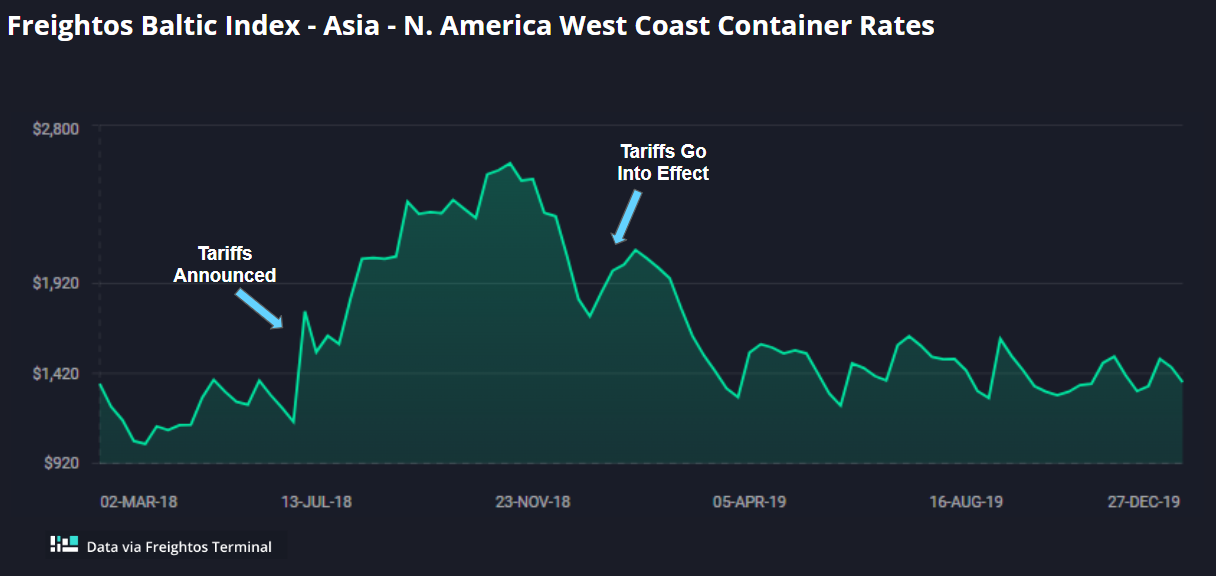
Tariffs on international goods are expected to impact ocean freight carriers as well. Tariffs increase the potential for a drop in the volume of container ships on the water and ocean freight rate increases, as fewer goods are being transported. 2019 saw a rise in ocean rates prior to tariffs taking effect, as shown in the Freightos image below. A combination of factors could create a similar rise in freight rates over the next few months. Trump has vowed to sign tariffs into law as soon as he is sworn-in in January. Chinese New Year is approaching (29 JAN 2025), which also tends to shut down Chinese ports for several days. Add to that- US East Coast and Gulf port workers have not reached a labor agreement, creating a looming threat of strikes and port shutdowns. This trifecta of events is poised to create a heightened urgency to get Chinese goods on the water. This scramble to get goods on the water will likely raise shipping rates for the near term.
WEATHER & CLIMATE
Meteorologists anticipate an increased chance of a La Nina pattern affecting China during the early months of 2025. A La Nina pattern could mean certain regions of the country could experience either above-average rainfall, or drier than normal conditions. How this will affect the 2025 Spring tea crop is yet undetermined. India’s Assam production was impacted in 2024 by periods of both drought and flooding which caused production to halt early. With a shorter season, larger tea buyers may deplete their Assam inventories and seek alternative black teas before the next Assam harvest is available as late as early Summer 2025.
NEXT STEPS
Firsd Tea will continue to monitor these developments and adjust our strategy to the situation. Firstly, we will review the status of our inventory of higher demand teas to make sure we are in a good position for the upcoming months. We will also be in communication with the Tea Association of the USA to make sure that those in the seats of government hear our concerns.
If you would like to better prepare for 2025, please speak with your Firsd Tea representative about:
- Review your current inventory levels and projections you may have for the next 3-6 months.
- Consider re-ordering earlier than you would otherwise. Surges in demand and shipping disruptions may cause delays in shipments out of China. Firsd Tea will aim to keep steady supply in our US warehouses, but unanticipated orders can rapidly reduce inventory.