
TOTAL US IMPORTS
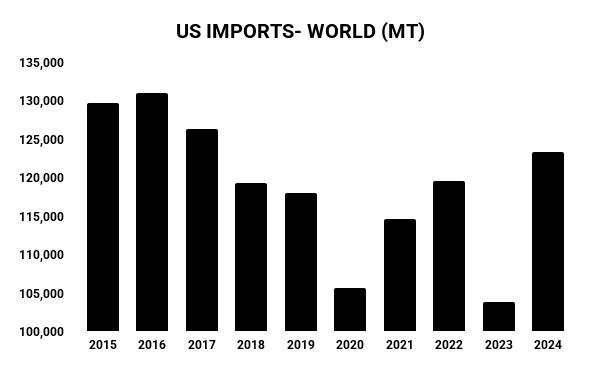
Total US tea import volumes appear to be re-balancing after inventories saw sharp rises and falls that coincided with the global impacts of COVID.
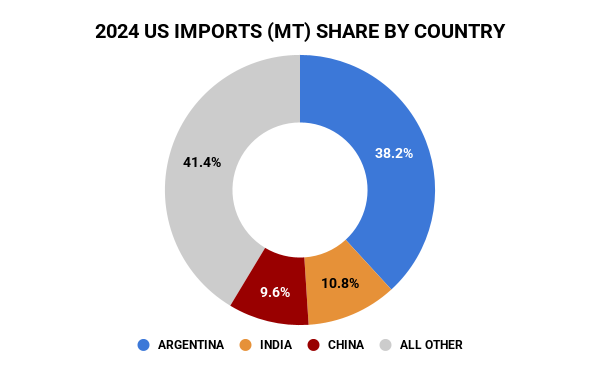
Argentina remains the top tea trading partner of the US, providing more than four times that of China, the third largest trading partner.
US IMPORTS FROM CHINA
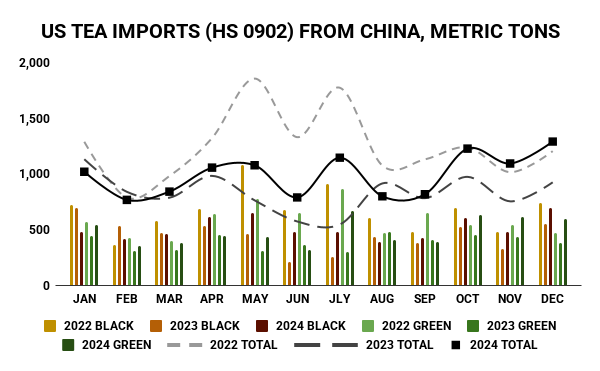
2024 ended on a high note for Chinese tea imports into the US, with yearly volumes of black and green teas up compared to 2023. China imports were up 19.6% over the previous year versus 18.9% for total world tea imports. About 50% of imports from China were black tea compared to approximately 48% green.
ORGANIC IMPORTS
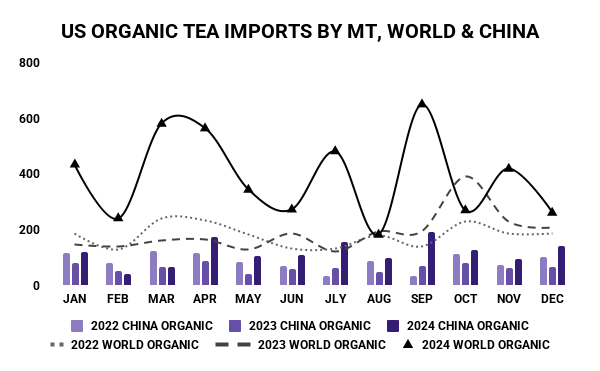
New Strengthening Organic Enforcement (SOE) guidelines came into effect in March 2024, resulting in changes in the way organic tea imports are captured in US trade data. It is likely that organic imports have been under-reported in previous years, but could also mean tea products that were previously considered to be in compliance may no longer meet the updated requirements. Overall, the more transparent data paints a clearer picture of the role of organic tea imports into the US market. About 30% of 2024 US organic tea imports came from China.
IMPORTS FROM CHINA – VOLUME AND $/KG
China tea imports into the US are generally in-line with overall global import trends. Tea imports have been generally declining, but the last 5 years are marked by periods of re-balancing caused by a combination of COVID, global shipping disruptions, and unsteady inventories.
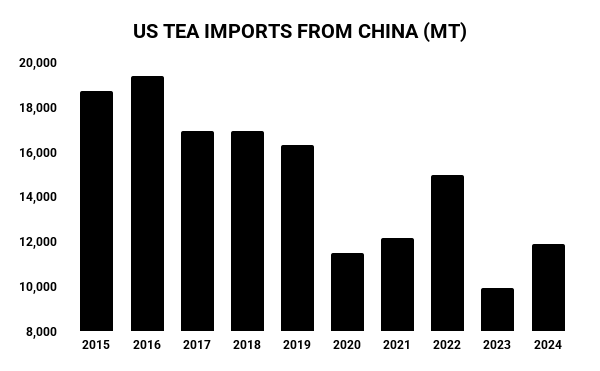
A 7.5% tariff on teas from China went into effect in February of 2020 and has continued to the time of writing, but the impacts of tariffs on average pricing are not as evident. Aside from tariffs average China tea import prices have been affected by a number of factors.
- Starting with COVID, import volumes began to decline around the same time as the tariffs came into effect.
- Higher-value packaged and flavored tea imports from China have suffered more in the past 3-5 years, while bulk and commodity tea formats have made some gains in the last 1-2 years.
- China’s domestic tea consumption has also seen an uptick due to the rising popularity of new-style tea beverages. Growing demand in China for bottled tea drinks, combined with the rapid expansion of new-style tea beverages, have contributed to greater competition for teas that might otherwise be exported. Anecdotal evidence suggests this competition is increasing, even if it is not yet evident in the general trade data.

Overall trends look positive for 2025. Volumes of imports are improving while prices have remained fairly stable. China continues to experience growing internal demand for tea, but this has not visibly impacted general trade activity.