
Green tea continues to make strides in the global market. Increased production along with growing exports in key areas point towards further development. Consumers gain greater appreciation for green tea’s benefits. Three primary green tea producing countries (China, Vietnam, and Japan) have seen rises in green tea exports along with steady or increased domestic consumption. The evidence supporting green tea’s improved positioning can be seen in areas of production, exports, and consumption in major markets across the globe.
PRODUCTION & EXPORT
Although black tea still dominates in terms of global production volume, green tea has gained traction over the past few years. Estimates put the share of global green tea production at around 33-35 percent of global tea production, compared to 30-33 percent in recent years. In terms of volume, about 2.25 to 2.5 million MT of tea produced is green out of the global total 7.1 million MT of tea produced in 2024. It also means that green tea production has risen from an estimated 2.1 million MT in 2021.
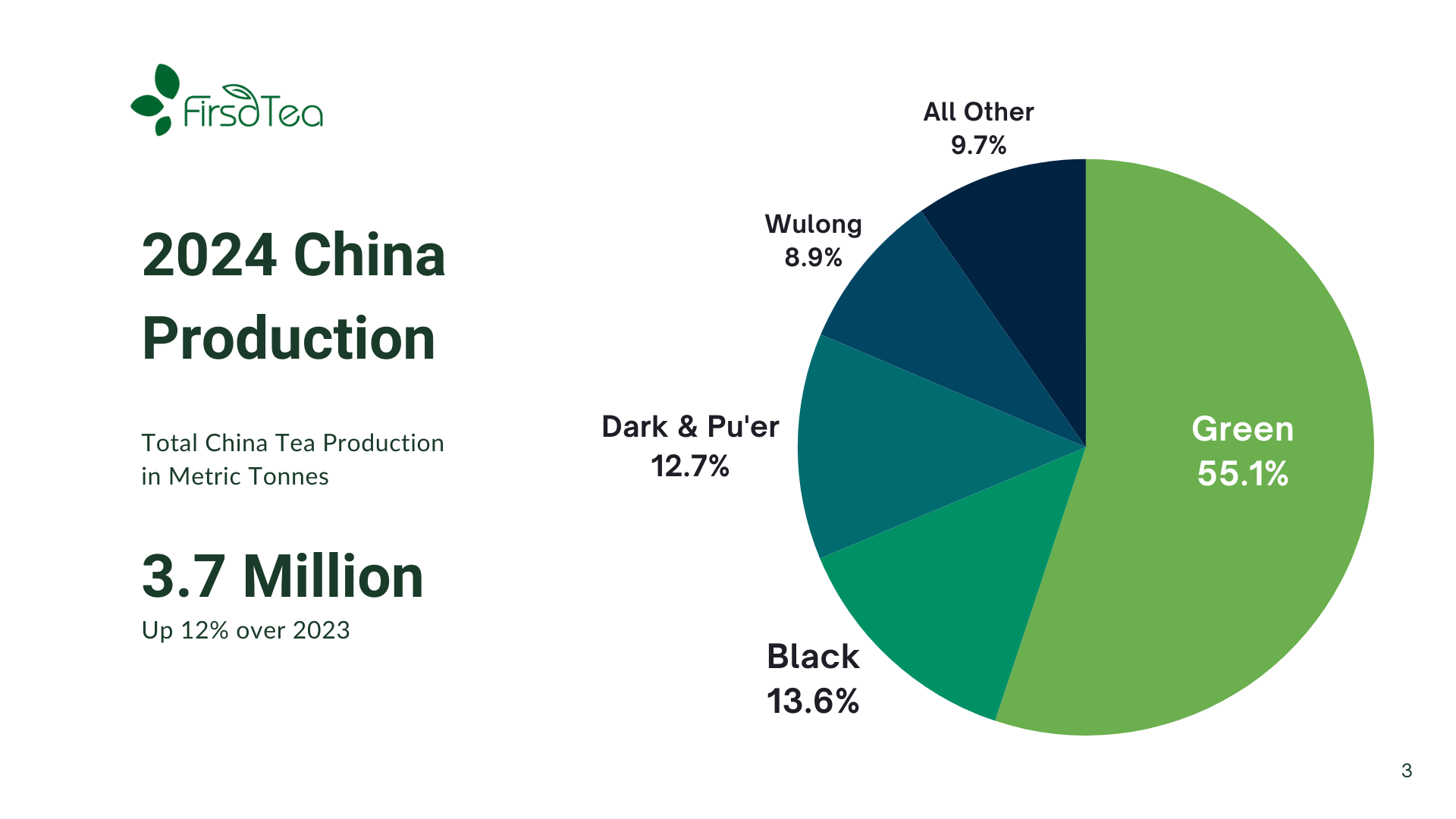
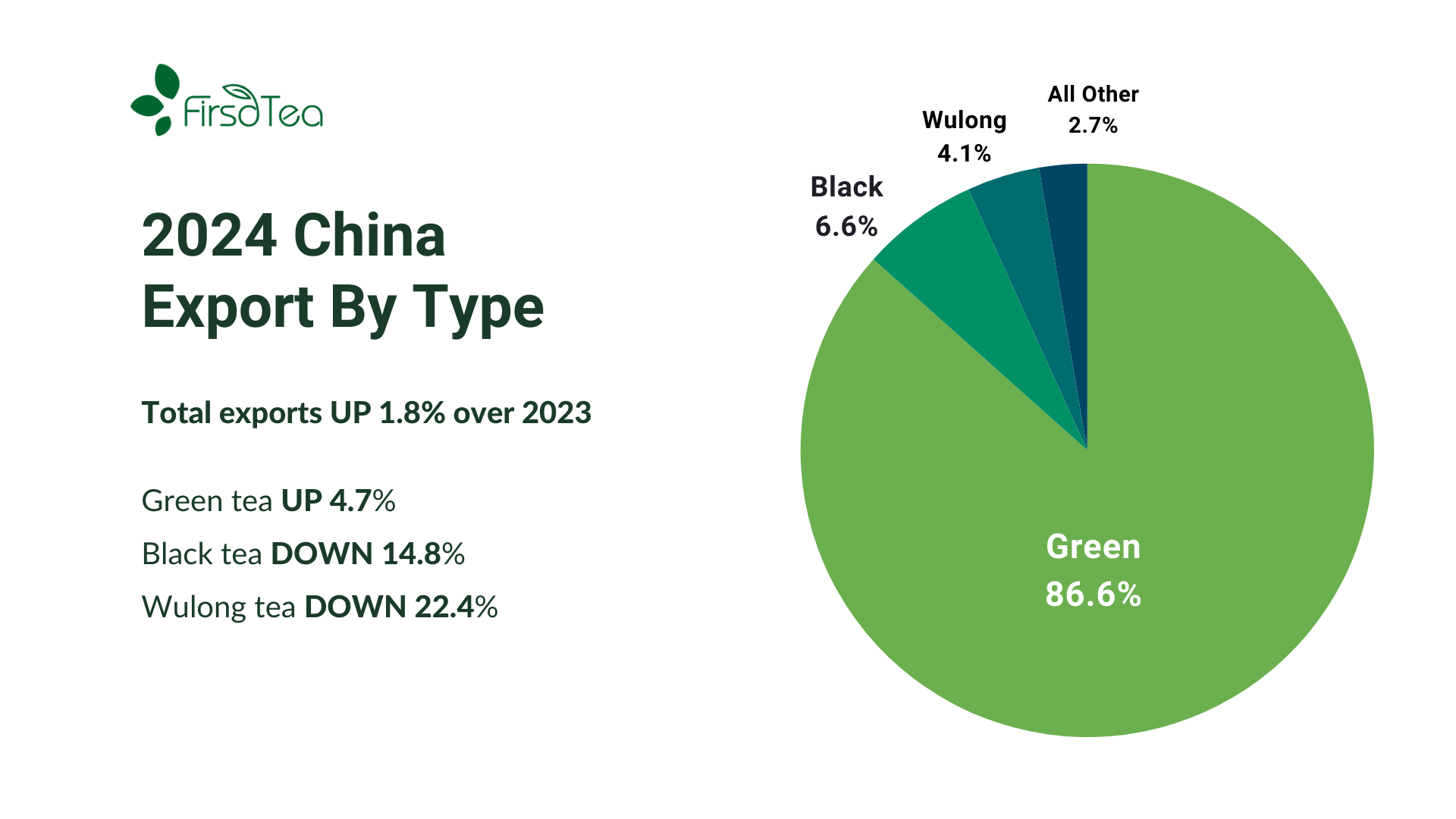
China remains the main driver of green tea production, contributing nearly 2.1 million MT in 2024. For further perspective, China generates over half of the world’s tea each year. In 2024, about 55 percent of its total production was green tea, more than black (13.6 percent), or any other tea type. China’s recorded green tea volume also does not include green teas like jasmine green tea because China classifies scented teas separately, so the actual amount of green tea produced could be considered higher than the national statistics report. China is also increasing its green tea production, gaining 218,000 MT in 2024 over the previous year. This is in comparison to a gain of 106,000 MT in black teas over the same time. All told, China produced over 90 percent of the world’s green tea in 2024, and is on track to continue to produce more green tea in the coming years. In exports, China tends to export about 12-15 percent of its total annual production across all tea types, but only exported about 10 percent of its 2024 totals. 87 percent of exports was green tea- about 324,000 MT out of 374,000 MT of exports. This makes China not only the largest producer of green tea, but also the world’s main supplier of green tea. By comparison, Kenya is the largest exporter of tea in the world, but its domestic consumption of tea is relatively low, and its exports are almost exclusively black tea. China places second in global exports, so China’s green tea exports play an important role in global tea trade.

Some calculations put Vietnam as the second largest producer of global green tea. Official data shows the country produced a total of 185,000 MT of tea, and estimates put the share of combined green, oolong, and other non-black tea at about 45 percent. This would place Vietnam green tea production in the range of between 64,000 and 84,000 MT. Vietnam also exported nearly 80 percent of its tea in 2024, with a trend towards declining black tea exports and increases in green tea now representing over half of the country’s exports.
Japan is the next best-known home of green tea production, contributing about 65,000 MT of green tea in 2024. Japan’s overall tea production has been declining for several years now, in part due to an aging farm population and drops in domestic consumption of green tea leaf at home. This shift in consumption trends has also played out in the producing regions, where Kagoshima surpassed Shizuoka as the top-producing prefecture. Shizuoka has been Japan’s leading producer for years, and still produces more of the higher-end, first season crop, but Kagoshima yields more later harvests of lower-priced green teas used in bottle tea applications. Like China, Japan consumes a majority of its green tea. In 2024, Japan exported less than 14 percent of its annual tea production. Japan has seen steady growth in export value over the past decade, particularly as global demand for matcha has increased. Japan’s higher value green tea exports can be seen in export prices. Japan’s exports average over $25 USD per kg compared to China’s average $3.50 USD per kg. Put into perspective, China’s 323,839 MT of green exports was valued at $10.7 billion USD compared to Japan’s 8,798 MT of green exports valued at $2.5 billion USD.
Indonesia also produces green tea, but at lower volumes than its Asian competitors. Official data shows a total combined 116,507 MT of tea produced in 2023, but no specific data on the portion that was green tea. It is known, however, that overall production volumes have been declining in recent years, and that the country exported 3,721 MT of green tea in 2024, and 2,656 MT in 2023. In 2023, green tea comprised only 7.4 percent of total exports. Indonesia has historically been more of a black tea producer, with up to 93 percent of exports being black tea.
IMPORTS
Since the majority of global tea trade and trade data tracks the flow of black tea, the popularity and cultural connections of green tea often get overlooked. This oversight is most glaring when it comes to the countries and traditions of Western Africa, and starting with Morocco. For the past several years, Morocco has regularly imported 74,000 to 80,000 MT of Chinese green tea each year. Even when considering that a share of that green tea will be re-exported, Morocco has a long cultural tradition of green tea consumption. Western tea drinkers may be familiar with the Moroccan mint style of green tea, but fewer realize how the tradition extends beyond Morocco. Ghana, Mauritius, and Senegal are also known for ataaya, ataya, or atay, a green tea tradition that involves a tea-preparation ritual and deep-seated cultural expressions of community and hospitality. The significance of green tea in these countries correlates with their imports of Chinese green teas. Ghana is China’s second largest green tea trade partner, with over 35,000 MT, followed by Mauritania (approx 15,000 MT green tea), and Senegal as the 6th largest overall destination for total Chinese teas. Outside of Africa, Uzbekistan has also been one of China’s stronger green tea trade partners, and is known for its long-held green tea traditions.
Outside of these African and Middle Eastern destinations, the US imported nearly 18,000 MT of green tea in 2024. About one-third of the green tea came from China, 16 percent from Japan (approx 2,900 MT), and the remainder coming from producing countries like Taiwan, Argentina, and Vietnam. Additionally, over 2,000 MT of annual green imports included packaged and blended green teas from non-producing countries like Canada.
CONSUMPTION
With this layout of green tea production and import, an overview of domestic consumption becomes easier to see. China only exported about 15 percent of its annual green tea production, leaving 1.74 million MT to consume within its borders. In general, tea consumption in China has received a boost from what is being called the “new tea beverage” movement. This trend includes freshly prepared drinks, including boba style teas, fruit teas, and similar drink innovations sold in food service settings. The proliferation of bubble tea competitors in China has also driven more imports, as companies look for affordable base tea blends for their drinks. Vietnam, for example, has noted an uptick in exports to China, and it is likely that Vietnamese green teas have found their way into proprietary tea blends used as the tea base of fresh made tea drinks. Additionally, China has seen an escalation in the popularity of bottled tea drinks. Many of these RTD teas have been welcomed as healthier, low-cost alternatives to coffee, and have attracted consumers away from their java. Tea exporters in China have noted that access to some of China’s lower-grade teas has become more challenging, as these cheaper teas have now found more opportunity in the domestic bottle tea market. The bottle tea companies are looking to innovate with upgraded teas as well, with some introducing dragonwell-based bottle teas and other higher grade green teas in their offerings.
As noted previously, Japan’s green tea drinking population is also shifting away from higher-grade green teas prepared at home to more bottle tea drinks. Ito En, among others, have been offering a range of bottled green teas in Japan and abroad. Increased demand for Japanese green tea, particularly matcha, has also spread throughout the US and parts of Europe. Some news headlines have indicated that growers in Japan are modifying their regular green tea farming practices to convert to growing the tencha leaf needed for higher matcha output. The main importers of green tea, including Uzbekistan and those in western Africa show no signs of slowing down their time-honored green tea habits either.
Taken together, the global green tea market is turning increasingly verdant.